Everyone is Investing in AI. Why Are So Few Organizations Realizing Its Potential?
Artificial intelligence technology may have gone mainstream, but let’s face the truth many organizations are discovering that projects in this field struggle to generate a real ROI Often, and especially when it comes to generative AI, these initiatives simply get stuck in the lab and never reach a production environment. This gap doesn’t stem from a lack of management awareness, but rather from deep infrastructure issues related to how the organization manages, secures, and accesses its data.
Where Did Our Data Come From?
To truly understand what is happening on the ground, Cloudera, in collaboration with the research firm ResearchScape, investigated this issue in depth. They surveyed over 1,200 IT executives worldwide. The research covered industries such as energy and infrastructure, finance, healthcare, and the public sector. The insights that emerged give us an authentic and honest glimpse into the challenges massive enterprises face when trying to integrate smart systems into their operations.
The Illusion of Readiness and the Data Access
Crisis The data tells a fascinating story. An overwhelming 96 percent of organizations report that they are already integrating AI into their core business processes, and 85 percent claim to have an organized data strategy. But the reality is much more complex. For quite a few companies, even the most basic step of mapping data across the organization takes months.
Furthermore, there is a huge gap between knowing where the data sits and the technical ability to actually retrieve it. Nearly 80 percent of organizations testify that their data-driven initiatives are delayed simply because they lack seamless access to information across different environments. Local pilots can succeed wonderfully when data is fed manually into the model. But in the real world it becomes clear very quickly that moving to production requires dynamic, automatic connections to core systems. Because information is scattered across different clouds, on-premises servers, and external systems, data silos are created that simply block the seamless access of agents.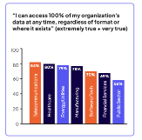
To understand what it looks like when the infrastructure works correctly, it is worth looking at the American banking corporation Regions Bank. The bank dealt with a serious headache of multiple fraud alerts. Employees were simply drowning in false positives, primarily because historical data and transaction data were locked in separate environments. This made it very difficult to build a complete and rapid picture.
Instead of continuing to fight windmills, the bank decided to implement a central data lake alongside a strict data governance framework. This unified infrastructure allowed them to train and deploy machine learning models directly in the production environment. The practical result is nothing short of amazing: the new risk-scoring model improved fraud detection by 95 percent, cut false positives by a third, and most importantly reduced the bank’s daily financial losses by 50 percent. This is a classic example of how eliminating data silos turns AI from a lab experiment into a powerful engine that saves millions and improves service.
The Governance Challenge and Risks
In Smart Agents Another worrying point emerging from the report is that only 18 percent of organizations manage their data under full governance. For a smart agent to provide true value, it must be granted broad access to organizational systems. Without a strict control system, such an agent could accidentally lead to the leak of sensitive information.
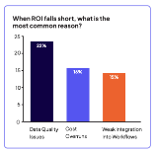
73 percent of respondents said their infrastructure performance limits their initiatives. The success of such projects requires not only a significant financial investment in infrastructure and hardware but also a deep conceptual shift within the company. Above all, massive investment is needed in employee training and data literacy to instill the understanding that data is a valuable asset that must be protected with the same level of strictness as the organization’s finances.
So, What Should Organizations Do Today?
A successful transition from a test environment to production requires an orderly architecture. Here are 5 key steps you should adopt:
- Data Discovery and Lineage: Automate data discovery and lineage tracking so you always understand the source of every piece of information.
- Data Fabric: Establish a governance and permissions layer that allows secure access to various information sources across the organization.
- Integration and Open Standards: Develop the ability to query data directly where it resides without constantly copying and duplicating it. Adopting open standards will prevent dependency on a single vendor and ensure flexibility.
- Data Quality Assurance: Implement strict controls. Flawed or incomplete data will always lead to incorrect decisions and unreliable results from ai models.
- Hybrid Interoperability: Design a flexible system that allows for easy integration and replacement of technological engines, so the organization can quickly adapt to market innovations and run across integrated cloud environments.
To summarize, we are in the midst of a true revolution in the world of data engineering. The successful integration of AI in large organizations is no longer just about choosing the most innovative model available. Success depends entirely on the ability to provide seamless, secure, and well-managed access to organizational data in real-time. Only organizations that build strong foundations of data readiness will succeed in turning this new technology into a truly significant force multiplier.
Author: Nitzan Sasson, Senior Solution Engineer, Cloudera
Sources: